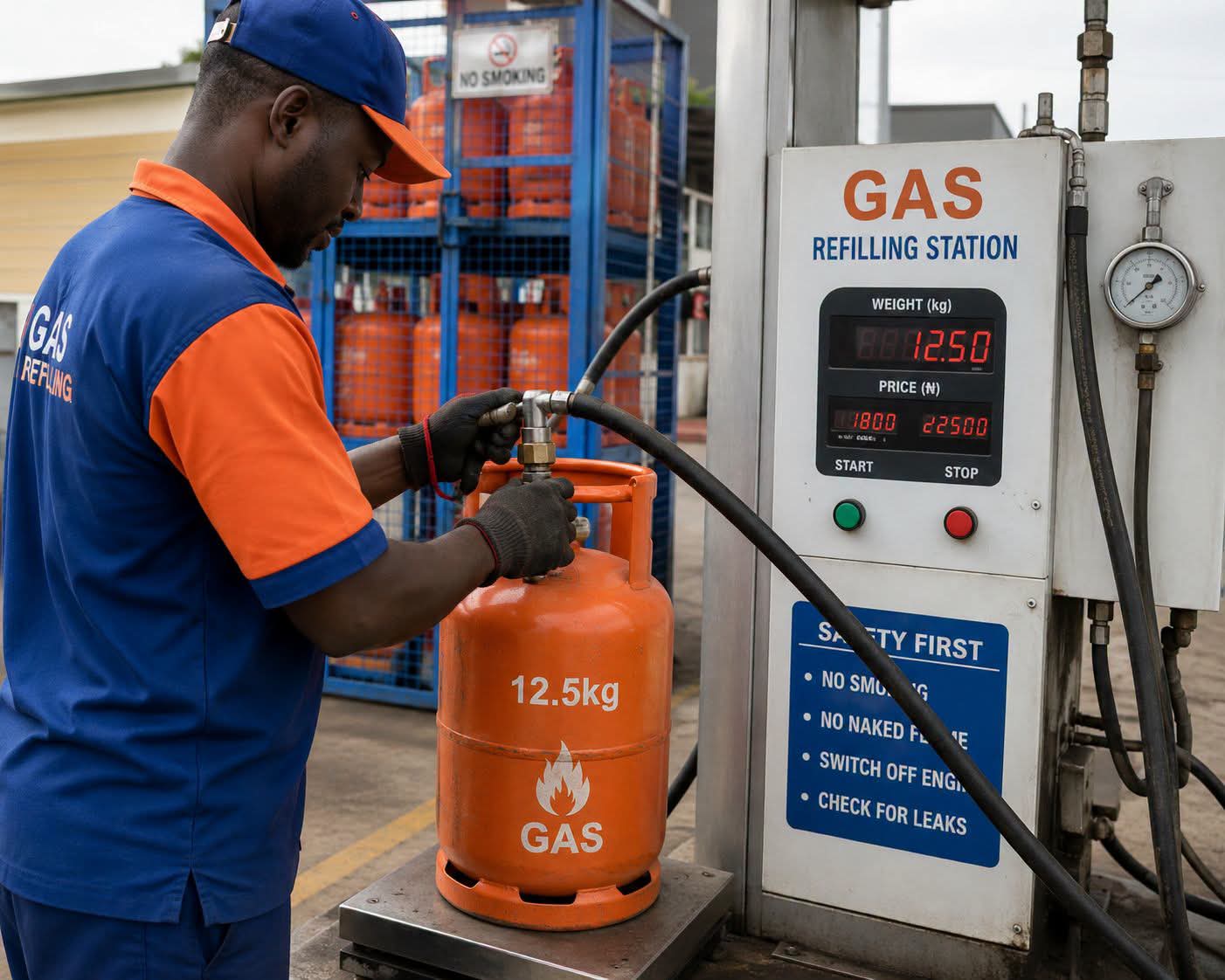
Retail prices of cooking gas have remained significantly above previous levels despite noticeable improvements in product supply following the Federal Government's recent intervention in Nigeria's liquefied petroleum gas (LPG) market.
Although shortages have eased in many parts of the country, consumers are still paying between ₦1,300 and ₦1,650 per kilogramme of cooking gas, according to industry stakeholders.
The improved supply follows an emergency stakeholders' meeting convened in Abuja by the Minister of State for Petroleum Resources (Gas), Ekperikpe Ekpo, on June 22. The meeting was called in response to worsening product shortages and sharp increases in retail prices experienced across the country.
Before the supply crisis emerged in May, cooking gas was selling for below ₦1,000 per kilogramme in several cities. However, as shortages intensified, prices surged to as high as ₦2,500 per kilogramme in some locations during June.
Speaking on the current market situation, the National President of the Nigerian Association of Liquefied Petroleum Gas Marketers (NALPGAM), Edu Inyang, acknowledged that the government's intervention had restored a measure of stability but said affordability remains a major challenge for millions of Nigerian households.
According to Inyang, the emergency meeting helped calm market uncertainty, improve communication between industry operators and government officials, and significantly increase the availability of LPG nationwide. However, he noted that these gains have yet to translate into meaningful reductions in retail prices.
He explained that cooking gas currently sells between ₦1,100 and ₦1,350 per kilogramme in cities such as Lagos, Ibadan and Abeokuta. In Benin City, Port Harcourt and Warri, prices range from ₦1,150 to ₦1,400, while consumers in Onitsha and Enugu pay between ₦1,200 and ₦1,450 per kilogramme.
In the Federal Capital Territory, Abuja, prices remain between ₦1,250 and ₦1,500 per kilogramme. Consumers in Kano and Kaduna pay between ₦1,300 and ₦1,550, while Maiduguri and several parts of the North-East continue to record the highest prices, ranging from ₦1,350 to ₦1,650 per kilogramme.
Inyang warned that persistently high LPG prices are undermining the Federal Government's Decade of Gas initiative, as many households have been forced to abandon cooking gas in favour of cheaper alternatives such as firewood and charcoal.
Despite the pricing challenges, he said one of the most significant outcomes of the Abuja meeting has been the substantial improvement in product availability across Nigeria.
According to him, national LPG supply capacity has increased from approximately 11 days of stock to about 22 days, while average daily supply rose from roughly 4,262 metric tonnes in May to more than 5,000 metric tonnes in June.
He added that the improved supply has reduced panic buying among marketers, eased shortages at filling plants and helped stabilise depot prices after weeks of severe market volatility.
However, Inyang stressed that retail prices remain high because of several unresolved structural issues affecting the industry. These include elevated international LPG prices, rising foreign exchange costs, expensive transportation and inland distribution, inadequate domestic production and insufficient market competition.
According to him, while the emergency intervention successfully prevented a deeper supply crisis, it should only be regarded as the first step toward addressing the sector's long-term challenges.
He noted that although confidence has returned to the supply chain and communication between government and operators has improved, fundamental issues such as infrastructure deficits, logistics constraints, foreign exchange exposure and pricing distortions still require comprehensive solutions.
Looking ahead, Inyang expressed optimism that consistent implementation of the agreements reached during the Abuja meeting could gradually improve affordability by increasing supply, stabilising depot prices and restoring consumer confidence.
Nevertheless, he cautioned that the market could become volatile again if reforms slow down or domestic LPG production fails to keep pace with growing demand.
He concluded that while the Federal Government's intervention has successfully restored stability to the LPG market, the real measure of success will be when ordinary Nigerians begin to experience sustained reductions in the price of cooking gas.
Until then, he said affordability will remain the industry's biggest challenge.


💬 Comments 0
Leave a Comment
No comments yet.
Be the first person to comment on this article.