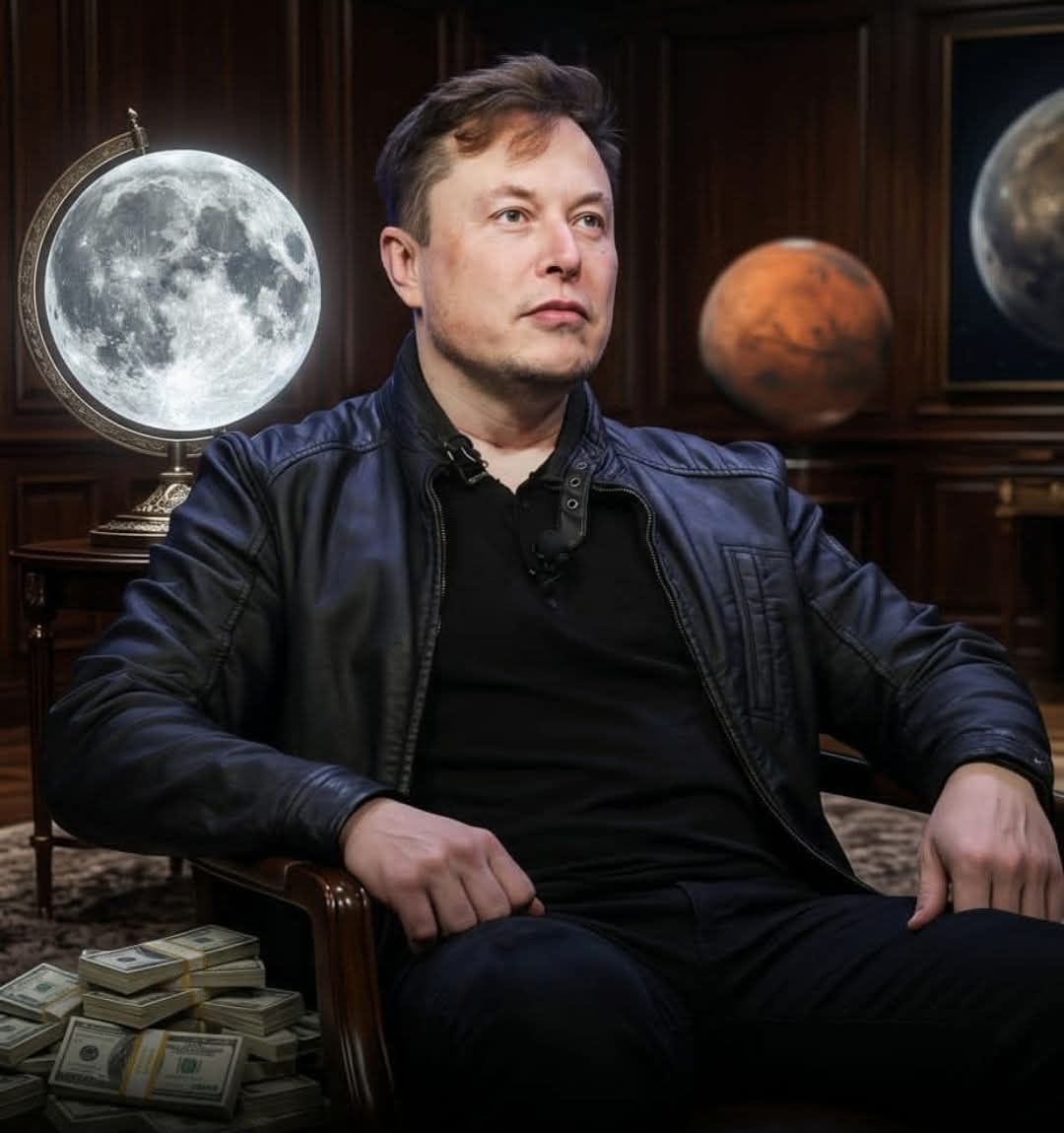
Elon Musk has unveiled another ambitious vision for the future of space exploration, predicting that SpaceX could send humans to both the Moon and Mars within the next five years while establishing permanent settlements on the lunar surface within the next decade.
Speaking during an interview with Texas Governor Greg Abbott, who was filling in as guest host on Sean Hannity's radio programme, Musk outlined what he described as an aggressive roadmap for expanding human presence beyond Earth.
According to the billionaire entrepreneur, SpaceX hopes to return astronauts to the Moon within the next two to three years before rapidly increasing the scale of its lunar missions.
Musk said the company ultimately wants to transport tens of thousands of people to a permanent base on the Moon within the next ten years.
He acknowledged that the target is extremely ambitious, noting that only a small number of people have ever travelled to the Moon since the Apollo missions.
Beyond short-term missions, Musk revealed that SpaceX's long-term objective is to develop a self-sustaining city on the Moon.
He envisioned a thriving lunar metropolis where people could choose to live permanently or even travel as tourists.
The SpaceX chief added that although reaching Mars presents greater technical challenges because of its distance from Earth, he remains confident that the company could send its first human mission to the Red Planet within five years.
He further projected that thousands of people could eventually be transported to Mars over the following decade, laying the foundation for a permanent human settlement.
Musk also discussed the company's plans to expand computing infrastructure beyond Earth. According to him, SpaceX intends to launch its first artificial intelligence (AI) satellites next year before significantly expanding space-based data centres over the following two years.
Despite the optimism surrounding Musk's latest projections, his history of announcing ambitious timelines has attracted scepticism.
Over the past decade, the SpaceX founder has repeatedly predicted that humans would soon reach Mars, making similar forecasts on numerous occasions since 2011. Several of those projected timelines have passed without being realized.
In 2017, for example, Musk announced plans to fly private passengers around the Moon by 2018, a mission that ultimately did not take place.
SpaceX's long-term ambitions also feature prominently in the company's financial strategy.
According to corporate filings, Musk could receive one billion additional SpaceX shares if the company reaches a market valuation of $7.5 trillion and successfully establishes a Martian colony with at least one million residents.
However, some industry analysts have questioned whether such a target is financially achievable, arguing that the enormous cost of creating and sustaining a settlement on Mars could significantly reduce the profitability of SpaceX's commercial ventures, including its Starlink satellite internet business.
Musk, whose estimated personal fortune currently stands at approximately $934 billion, remains the world's richest individual.
Although he briefly surpassed the $1 trillion mark following SpaceX's initial public offering, subsequent declines in the company's share price have reduced the value of his net worth in recent weeks.




💬 Comments 0
Leave a Comment
No comments yet.
Be the first person to comment on this article.