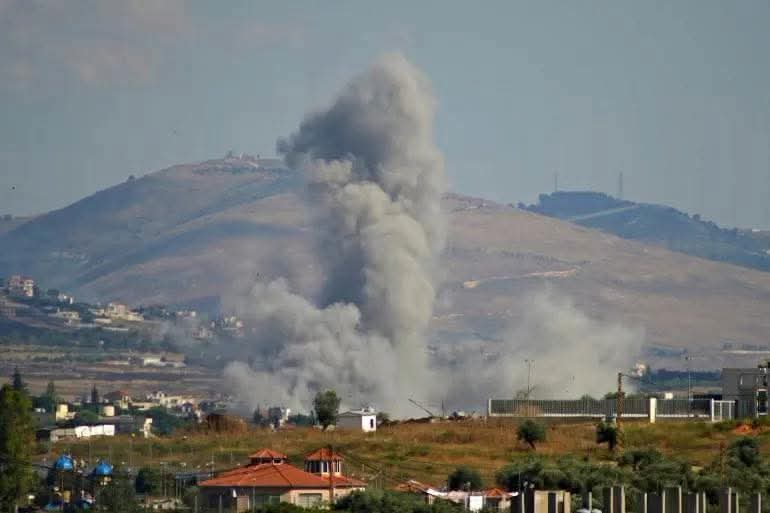
At least 18 people have reportedly been killed following a fresh wave of Israeli airstrikes across southern Lebanon, as tensions between Israel and Hezbollah continue to escalate despite ongoing diplomatic efforts aimed at preserving regional stability.
The strikes, which occurred overnight, targeted multiple locations in southern Lebanon and were accompanied by what both sides described as intense fighting on the ground.
According to reports from Lebanon's National News Agency (NNA), the death toll from the latest bombardment has risen to 18, while additional casualties are feared as rescue operations continue in affected areas.
The Israeli military confirmed carrying out a series of attacks across southern Lebanon, stating that its operations remain ongoing.
Reports also indicated that four Israeli soldiers, including a battalion commander, were killed during clashes with Hezbollah fighters in the region.
The renewed violence has further complicated diplomatic efforts involving the United States and Iran, with planned technical discussions in Switzerland reportedly delayed due to the deteriorating security situation.
According to reports, Iranian officials declined to participate in the talks amid concerns over Israel's continuing military operations in Lebanon.
Israeli authorities have maintained that military action remains necessary to counter Hezbollah activities along the border, arguing that the group continues to pose a security threat through attacks targeting northern Israel.
The latest escalation has triggered strong reactions within Israel's political establishment.
National Security Minister Itamar Ben-Gvir called for a more aggressive response following reports of Israeli military casualties, while Finance Minister Bezalel Smotrich also advocated tougher military measures.
Earlier incidents in southern Lebanon had already heightened tensions.
Local reports indicated that Israeli drone strikes carried out in recent days targeted vehicles and locations near several towns, resulting in additional casualties.
Hezbollah, for its part, claimed it had successfully resisted a multi-day Israeli military push aimed at advancing deeper into southern Lebanese territory.
The group said its fighters deployed drones, rockets, and artillery fire against Israeli troops and armored vehicles, preventing further advances toward strategic locations.
The clashes come amid increasing international pressure on Israel to halt military operations in Lebanon and comply with ceasefire-related commitments linked to wider regional diplomatic efforts.
United States President Donald Trump recently reiterated calls for a comprehensive ceasefire across multiple conflict fronts in the Middle East, urging all parties to support ongoing negotiations.
Meanwhile, concerns have also emerged regarding Israeli military deployments inside southern Lebanon.
Recent military maps released by Israel reportedly show troop positions extending several kilometers into Lebanese territory, prompting criticism from legal experts and regional observers.
Some analysts argue that the deployments could raise questions regarding existing border and maritime agreements between the two countries.
In a related development, the United States Treasury Department announced fresh sanctions targeting individuals and entities allegedly linked to Hezbollah.
Washington said the measures were intended to disrupt financial networks accused of supporting the group and undermining efforts toward stability in Lebanon.
The sanctions reportedly affect individuals and organizations operating across Lebanon, Syria, Iraq, and Oman.
The ongoing conflict has continued to exact a heavy humanitarian toll on Lebanon.
According to figures released by Lebanese health authorities, thousands of people have been killed or injured since hostilities intensified, while more than one million residents have reportedly been displaced from their homes.
As fighting continues, regional and international stakeholders are expected to intensify diplomatic efforts aimed at preventing further escalation and restoring stability along the Israel-Lebanon frontier.



💬 Comments 0
Leave a Comment
No comments yet.
Be the first person to comment on this article.